General Information on Physical Security
Physical security is perhaps one of the first things that comes to mind when working with Protective Security. Protective Security one of the three pillars of protection specified in the Security Protection Act 2018:585. Chapter 2, Section 3 states that "physical security shallprevent unauthorized persons from gaining access to areas, buildings, and other facilities or objects where they may gain access to security-classified (secret) information or where security-sensitive activities are otherwise conducted."
Physical security can range from perimeter protection in the form of a fence to point protection such as a security cabinet or vault, encompassing elements like walls, doors, windows, locks and access control systems, alarms, surveillance, as well as rules and routines for access cards, visitors, and more.
GovSec can help you assess the antagonistic threat in order to plan the physical protection you require.
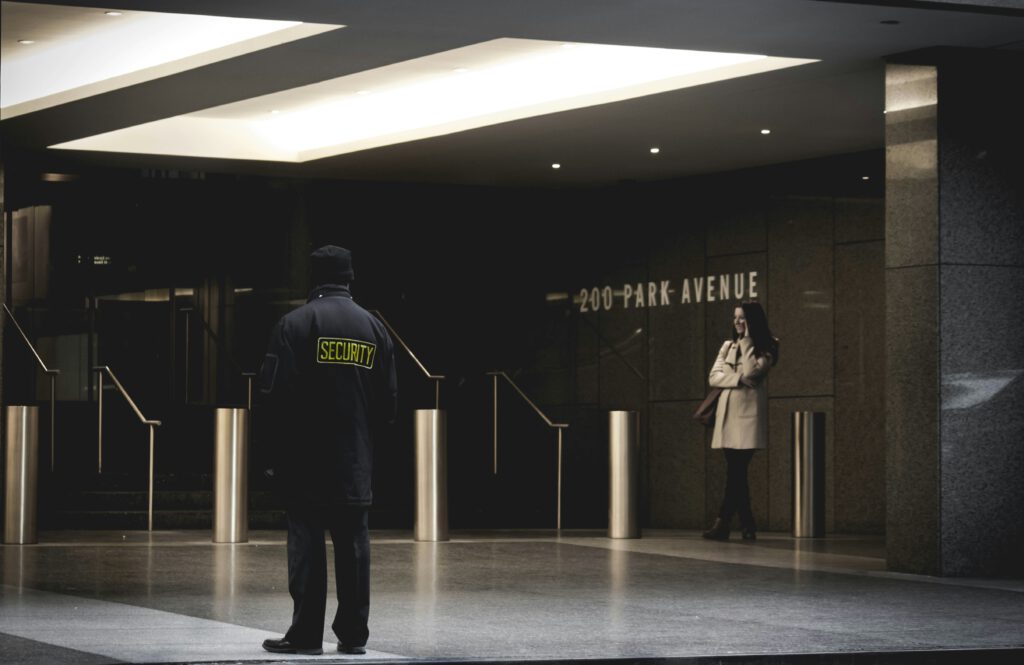

Protected Objects and Protective Guards
For certain entities conducting security-sensitive operations, a protected object status may be granted under the Protection Act (2010:305) for buildings, facilities, and areas, for instance, which confers greater powers for guarding and surveillance, for example, by using protective guards instead of regular security guards.
This means, for example, that anyone guarding a protected object is authorized to decide on body searches and the inspection of vehicles, vessels, and aircraft, to search for items that may be seized in order to fulfill their guarding duties.
A decision to designate something as a protected object normally means that unauthorized persons do not have access to the protected object. The access prohibition also includes access by means of an unmanned vehicle, such as flying in so-called drones.
The access prohibition may be combined with a ban on making images, descriptions, or measurements of or within the protected object. The access prohibition can be replaced by a ban on imaging or a ban on swimming, diving, anchoring, or fishing if that is sufficient to protect the protected object.
GovSec can help you assess whether it is appropriate to protect your operations by applying for protected object status. GovSec can prepare such an application.
Planning of Physical Support
Planning of physical protection must be conducted meticulously to achieve appropriate protection balanced against risk-taking due to factors such as costs or other conditions like building regulations, among others. It is crucial that the physical protection for security-sensitive assets is correctly balanced from the outset, as modifications or additions often prove more costly than implementing the correct measures from the beginning. Security-sensitive operations necessitate that Protective Security planning must be kept current over time through updates, for instance, due to a changed threat landscape, technological advancements, or alterations in the conduct of security-sensitive operations.
GovSec can support you with methodological guidance and assessments to develop such planning. We have experience in analyzing requirements and planning the construction of complex high-security facilities.